Author: Ursula Spectre

December 1973

Dear Pilot,

When you hear the sound of depth charges splashing in the water above, U-505 tells us, you will hear some of the most devout words right along with the filthiest. They were indeed in German though so he keeps those to himself. For once however, our entire yard agrees that certain situations not only permit – but perhaps even call for – some choice words not fit for the public.

That your visitors don’t expect to be educated or entertained… I enjoy talking about my revenue service and I don’t think I’d like it if no one asked to hear about it. Still, every now and then, someone who rode my train and remembers us will take over and guide a tour themselves. It sounds like your museum is more like that, by design. I always appreciate when a guest takes over because as I get further away from my last run, I find younger guests can’t really understand what my train was beyond what we are now. It’s one thing to tell them about your work yourself or for a guide to, but quite another to have someone among them enthusiastically going on about it instead. It’s like being introduced to them by an old friend then.

I hope that is what it is like at your museum too.

Of course, there’s obviously something to be said for filling in the gaps for them. No one person can know your entire history better than you yourself do. And sadly, as time marches on, it must get harder to come across someone who, for instance, rode in Silver Dome for that first run. It sounds like a wonderful trip and true to the Q, they made sure to capitalize on every part of it. It’s a story you should capitalize on now.

You must have pulled all sorts of cars over your revenue service too. It wouldn’t have done to say so then, since being a flagship engine with a dedicated train is a great privilege, but I was always a little envious of the pool service engines when I was still running. I got to see a lot of the Burlington Route out of necessity because they kept having to reassign me when I couldn’t handle the traffic anymore. I even worked all the way down in Texas for a short while! I always had a regular route though; it would have been a waste of the name to move me around so much that people couldn’t expect me. So pool service always seemed exciting, not knowing what cars were going to be in your train or where you’d even be going that day. If I had been built for pool service I probably would have preferred the stability of my train as it was, but the grass is always greener on the other side of the track, isn’t it?

And the cars kept getting more specialized and swappable, once they let go of the articulation. They packed all they thought I needed into two cars and still had to add a third later. And that was before they started making sleeper cars and lounges and drawing rooms. Did your Texas Zephyr have a regular roster or did they switch them in and out a lot? What kinds of cars did you have for that route? You seem to remember your cars very well for having worked with so many.

You even remember cars that weren’t on your trains! It’s a little strange that they decided to build a new Silver Inn, but it makes sense that he wouldn’t be the same Silver Inn. That crash was so notorious and everyone heard about how he’d been wrecked. I have always wondered if we aren’t only who we are because we are known to be. That is, I could have my entire front end replaced but I’m still the Pioneer Zephyr because people know I am. Silver Alchemy can become Silver Dome quite easily with just a change of a nameplate. But Silver Inn? Everyone knows that’s a new Silver Inn.

My coaches disapprove of yours misleading you about the Æolus. They say it’s unbecoming and disrespectful to lie to their engine. I have gently tried to argue that it isn’t a lie to leave a detail out and that there’s some room for fun when there’s no schedule to keep. I had to be a lot less gentle when they said that maybe I do suspect why the Goddesses got on so well with No. 4001. I didn’t realize they’d neglected to say there were two Æolus when you first mentioned them though so I hope you didn’t feel silly about it when you found out.

I’m glad to hear you’re all being cared for so well, especially now that it’s winter. Like washdowns, it’s an undertaking to repaint us. Thankfully, stainless steel doesn’t need paint and U-505 was painted when he was delivered here. I doubt the steam engines would say no to a new slick of black though. It’s good that you’re keeping tabs on each other even when some of you are tucked up in barns. I still think, despite our differences, we here in our yard would be less content if any of us were moved out of sight.

It would be nice to have someone on the inside of the museum who could tell us what was going on in there. The guides mention things, but it’s hard to imagine without being able to see it yourself. Some of it I can guess at, but only because I’ve seen it before somewhere else. Like automobiles or airplanes or the Rocket replica they have in there; I’ve never met the one who works here, but I did meet another Rocket at the Railroad Fair. He belonged to Henry Ford, who makes automobiles out of Michigan. Our Rocket isn’t made to steam, only to show how his machinery moves, but Ford’s Rocket was and he performed in the pageant with me and 999.

The guides say there’s Christmas trees inside too. Lots of them! They fill the main hall with them and decorate them for different countries. I didn’t think I’d get to see it since we’re too big to go indoors, but the museum made a postcard of it! They brought one out to show me and to go in this letter so you can see too. The thing in the middle of the hall is a Periodic Table of Elements. They tried to explain it but I don’t think I understand. They say elements are what everything in the world is made of and every element is on that table. Like iron and aluminum and copper. I asked if stainless steel was on it; they said no. How can that be if we’re made of stainless steel?

They said it was “complicated”.

“Complicated” like your volunteers getting all those materials from the CTA might be? Or maybe it’s the same as a lot of the things we have here at the MSI. The museum opened alongside the Century of Progress in 1933 and when the fair ended, they convinced a lot of the companies who had displays to donate them here instead of scrapping them. Most of them weren’t needed after the fair so it didn’t cost the companies anything to give them to us. Maybe a nicer way to think of your new “salvaged” hardware is that it’s a donation. Or even more generously, as a Christmas present.

Your letters are sort of like a present too. The guides say part of the fun of Christmas gifts is knowing that they’re coming but having to wait for them. Waiting for your replies is like that, I think. I’m happy that anticipating mine helps make things more cheerful there.

Here’s wishing all of you at the IRM a restful holiday so you and your volunteers will be ready to sort through your new gifts and make use of them in your yard!

Your friend,

Pioneer

February 1974

Dear Pilot,

My guides were more subtle about it but suggested the same thing; that if these letters got any longer, they’d have to put more stamps on them. They were nice about it though. Letter writing is something that people are taught in school as children. You and I are behind the curve, but they’re amused by how well we’ve taken to it. Too well, apparently!

It does remain busy inside during the holiday season, but it’s too cold for guests in the winter so they close our yard to them for the season. One cannot see everything at the museum in one day so if the visitors are going to forgo an exhibit in winter, it would probably be ours anyway. Even if we were still open then, we’d probably still not be working as much.

Since we’re not, 2903 likes to spend his days off sleeping. He spent about a decade in storage before coming here so he’s in the habit of sleeping in. The rest of us try to be quieter to let him, but it makes for a dull day.

Inside, I’m told, they only get Thanksgiving and Christmas off because there’s so much to be done over the holidays. Then once they’re over, the Christmas trees have to be taken down and all the decorations packed up. My guide says that the trees are perfectly enchanting up to about a week into January, when they then become a very large task to be done. When they started Christmas Around the World though, they just had one big tree that they redecorated every night for a different country. Having fifty separate trees that stay up all month seems more efficient even if you have to take them all down at once.

Once the trees were out of the way, they set up a Mexican-American Art Fiesta exhibit. Did you know singing and dancing are also art? I’d never thought about it before, but they had different performers come and there were a lot of school field trips to see them. That exhibit finished up on the 2nd, and now we’re hosting science fair projects from the local schools. And that’s all just since New Year! I’d never thought much about what happens indoors, but since you’ve been telling me about your shops, I’ve found out that the inside of my museum changes all the time, much more often than the outside does.

Are you the only diesel at the IRM? I suppose that’s not surprising, but I guess I just thought there’d be more of us there. Then again, when I was preserved, there was certainly… debate about the merits of it. I had the benefit of a notable local history to bolster the argument (and being a former Century of Progress exhibit makes you particularly appealing to the MSI), but diesels are still very new. But we get older every day! And if your museum started out as only for interurban cars and now they have steam engines and trolley buses and you, I’m sure more diesels will find their way there too.

They’ll be lucky to have such a singular engine to welcome them.

Your friend,

Pioneer

April 1974

Dear Pilot,

People – my guides were quite delighted to inform me – aren’t born knowing anything at all! It’s why they have schools and museums. I suppose that makes some sense. Locomotives are built all at once so we mostly know what to do as soon as we leave the shops, but for people it’s a process that takes years. There’s even an exhibit about it inside! They don’t have a postcard of it to show us (they say it doesn’t make for a pretty photo to send in the mail) but the exhibit shows that people start out so small that you can hardly see them at all and then they get bigger over time. At first, they can only cry and eat and sleep, but they start learning things like how to walk and talk very quickly. When they get big enough, they go to school and learn how to do science fair projects and write letters. Then the schools bring them here to learn about how they were once too small to know anything, haha!

U-505 and I do talk quietly to each other on our days off. Ours is the same as any yard, where we talk about the same things over and over. On Thanksgivings, I always like to ask him what he’s grateful for. I mostly mean it as a joke since U-505 thinks he’s been rather unlucky (I disagree). Thanksgiving is an American holiday so he always tries to argue with me that it’s not any German machine’s place to intrude on our celebrations. I think he is really just avoiding the question. With enough goading though, he usually will admit to being grateful for “American hospitality”, which I suspect is him joking back even if he says it with total seriousness.

On our Christmas days off, I ask U-505 to tell his Christmas story. He just has the one because he was only in service for two years and he was in dock over his first Christmas because he was being repaired after that airplane attack. It’s a funny thing though. U-505’s very proud of the story, but it’s also a little embarrassing so he’ll only tell it if he thinks 2903 isn’t listening. I can only ask him to tell it on Christmas then.

The guides say that you and I are both products of the Great Depression and this is why we are more given to appreciate our lot in life and even the lots of others. U-505 and 2903 are both wartime builds and maybe that is why they do not get along.

415 sounds like a very dedicated, hard worker. I imagine all of your engines in operating condition are determined to give your visitors a solid ride. I always kept an ear out for complaints about heat from cars though. If cars are hot, the passengers probably are too. They’d be used to having air conditioning now so they’re more sensitive to heat. Has there been any progress on repairing your cars’ air conditioning? My guides say that stainless steel reflects the sun’s rays, rather than absorbing it like dark paint would, so they should be cooler than a lot of other stock in your yard.

Maybe we come out of the shop knowing how to do our jobs, but we’re still learning new things all the time, aren’t we? And it’s another thing to be grateful for! I don’t think it’s too terribly hot yet, so it must be working like they say. We also get nice breezes in from across the lake too.

2903 and 999 are agreeing loudly about their paint absorbing sunlight, but they don’t mind. It’s nothing to a hot firebox. U-505 mentioned to me that he was painted all black once for his war bond tour, but he says now that he was also still in the water then so he doesn’t know if it makes much of a difference for boats.

“If it did,” he says, “it was less than three inches.”

Everyone is being so agreeable about it. It might not be too hot to argue there, but maybe it is here!

Your friend,

Pioneer

June 1974

Dear Pilot,

I’m learning about a new exhibit every letter now too, now that I have a reason to ask about what’s inside!

For instance, when my guides read your last letter to me, they explained that babies don’t look very cute before they’re born. The ones in the exhibit aren’t done yet so they look gross, but children sometimes enjoy when things are gross so the babies are still quite popular despite that! It seems they’ve also recently become controversial though so it’s another reason not to have a postcard of them. I don’t really understand why exactly, but I was controversial when I was new too so I’m sure it’ll blow over in forty years or so!

There’s too many exhibits at the MSI to count, especially since many of them aren’t permanent and get switched out for new things. Even with such a big building, the museum doesn’t have room to keep everything it displays forever. Having new exhibits coming in all the time gives people a reason to come back so it’s good that they swap things out.

It’s funny you mention that your museum used to be called something different. Mine did as well! Our building was first built for the World’s Columbian Exposition, the Chicago World’s Fair in 1893. It was called the Palace of the Fine Arts then and they showed art from all over the world in it. Because we had that big famous fire twenty years before, the other countries sending art would only do it if the building was fireproof. All the other buildings for the Fair were not built so sturdily so when it was over, the rest of the White City got torn down or fell apart… all except our building! (999 was also built to show at the Columbian Exposition and is just as resilient!)

The museum went through more name changes before they found one they liked. There was a lot of back and forth over whether it should be named for the man who donated the money to found the museum. His name was Julius Rosenwald and everyone wanted to call it the Rosenwald Industrial Museum in honor of his civic contributions, but he insisted that the museum shouldn’t have a donor’s name on it. If it wasn’t named after him, then it would belong to the people of Chicago and he thought that was right since the people pay taxes to support us. He wanted instead to name it the Museum of Science and Industry and everyone eventually came around to his way of thinking.

When they finally settled on the name though, people didn’t quite understand how a museum could display industry. They even wrote letters to the newspaper about it. They must get it now since that’s the name that stuck. Your museum only needed two tries to get it right, but I’m glad they changed it to be broader. We wouldn’t have got to be pen pals if they only wanted your IR 65 and cars like her. But then, if you go to the trouble of founding a whole museum for one car, you have to find other things to display with her. You can’t have a museum with just one exhibit; everyone would only visit the once!

It sounds like we here in our yard are lucky that we don’t need fuel or coal anymore. The visitors can take the train and then walk to the museum to save gas, although it is a bit of a trek from the station. Our lawns are quite vast. We’re still getting plenty of visitors though. It helps that we don’t charge admission except for certain things. U-505 is making money on his tours. There’s a coal mine under the museum that costs extra to see too. I thought to ask if maybe we could send your steam engines coal since we have the mine, but my guides say it’s not meant to actually produce coal, it just shows visitors how it would be done. That’s how you display industry.

While we’re on the subject of counting chickens before they hatch though, you can do that here too. There’s an exhibit inside where you can watch baby chickens hatch from eggs right in front of you. Chicks are also kind of gross when they’ve hatched, but they get cuter real quick like babies do once they’re born. New chicks hatch here every day so keeping count of them after a few days would be difficult.

We cannot send your museum coal from our mine, but we have plenty of safely hatched chickens to count on your return to working order.

Your friend,

Pioneer

August 1974

Dear Pilot,

Minerva is very wise! That’s exactly why I was controversial at first. Even after the Century of Progress, there was still a lot of talk that diesel was just a novelty and wouldn’t catch on. Steam engineers especially liked to say this, although I think they just didn’t like anything that might put their engines out of work. There always seemed to be plenty of work for all of us though. If I’m being honest, a steam engine like 999 is stronger and can do more things than I could. She’s worked practically every job there is to do on a railway, even despite being built for express passenger service.

If her record is to be believed – and I think it is – she’s also half a mile per hour faster than me. She is very modestly telling me now that that’s only under perfect conditions. World’s Fairs do seem to make an engine famous, but breaking a speed record was often how you got to be notable enough to be exhibited at a World’s Fair first.

My guides say they are learning a lot about the history of the museum in order to help me reply to your letters, since we are both so suddenly interested in it. Most of the first exhibits here at the museum were displays left over from the Century of Progress that companies donated since they were just going to throw them out otherwise. So the museum seemed like a World’s Fair inside at first.

It was actually meant to be very much like the Deutsches Museum in Germany though. There, all the exhibits let you touch the buttons and operate the machines and devices. They call this “interactivity” and it’s what made that museum special because this was a very new way to think about museums at the time. Before that, museums would put everything behind glass and you could only look at it. After seeing the Deutsches Museum and how well people liked interactivity, it was decided that Chicago should have the first museum like that in our country.

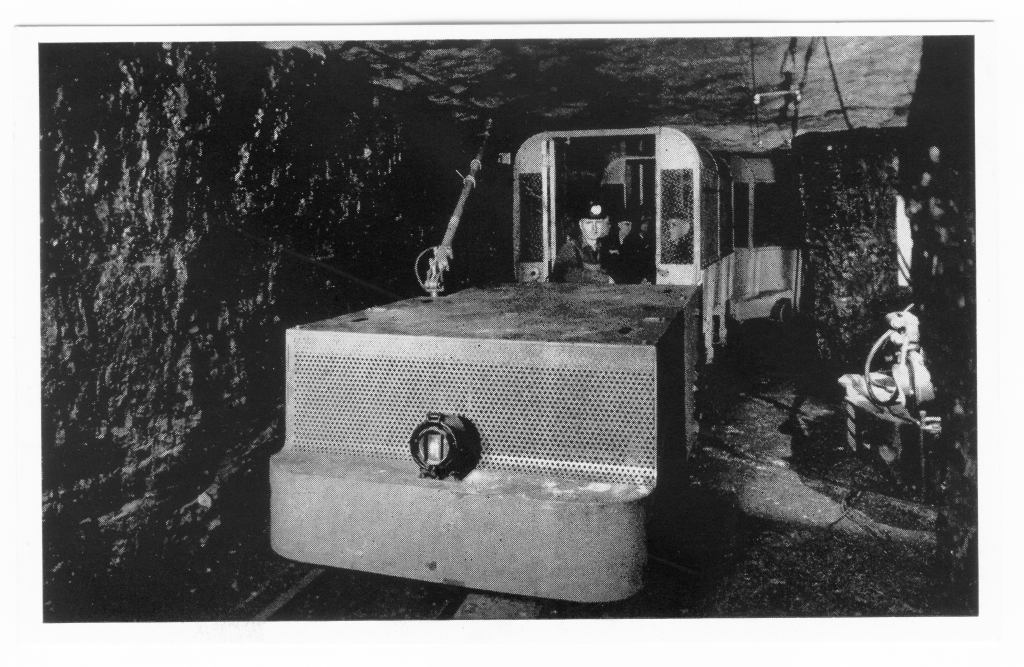
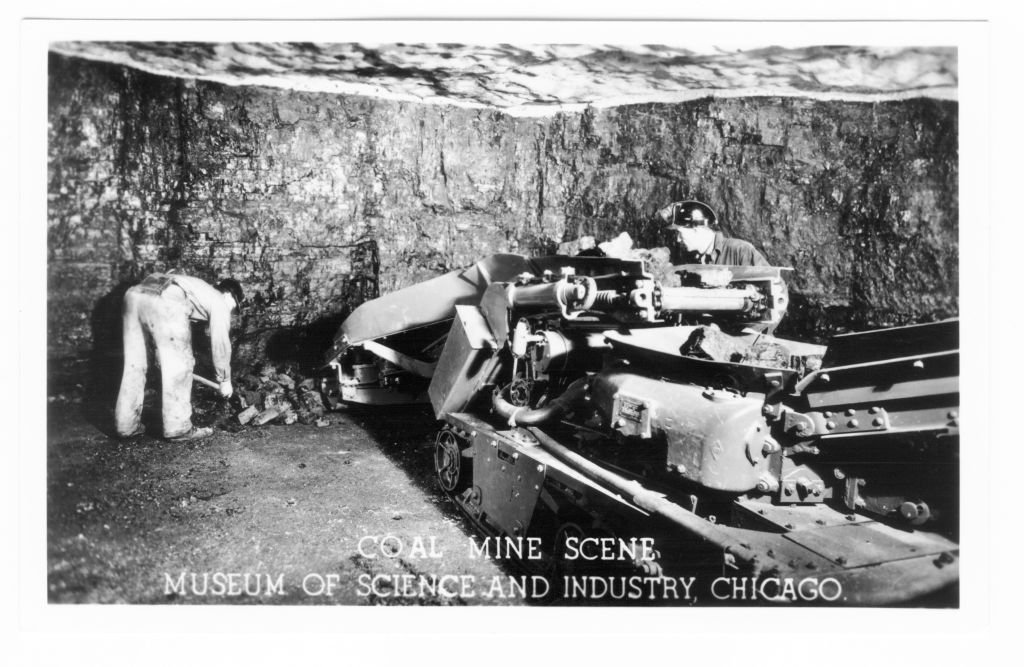
The Deutsches Museum also had a mine exhibit so when they were thinking of how our museum should be, they knew it had to have a mine too. That was the first thing they started building, even before they thought to ask for leftover things from the fair. Ours isn’t a real coal mine, but it is meant to look exactly like one called the Old Ben No. 17 that used to operate in southern Illinois. They even took all the old machinery from the real mine and put it in the replica they dug out under the museum.

Leave it to diesels to know nothing about coal, but at least we’re a little less ignorant about it now. You were right; the mine is too big to fit on one postcard, so they have a few different ones with smaller parts of it. My guides will enclose these so you can see.

The coal mine was our museum’s first exhibit and until U-505 arrived, it was the most popular one too.

As it happens, my guides say too that even if they had named the MSI after the World’s Fair, U-505 might still have made it here. The Deutsches Museum has a submarine so of course the MSI had wanted to have one too. It’s unfortunate everything that had to happen in order for our museum to get its submarine, but it’s also very fitting in the end that he should be a German one, since we get so much else of our Ways from the Deutsches Museum.

As to the baby chicks, when they’re about a week old they get sent to the Lincoln Park Zoo. They have a Farm-in-the-Zoo exhibit there where people can pet the animals. We have a farm exhibit here too but aside from the chicks, our animals are just models or robots. Apparently, though, some parts of the farm exhibit had to be put behind glass. The baby chicks are in a glass case because they are small and could get hurt or lost. The cow milking exhibit has a glass wall too because people kept twisting the tails off the model cows. That’s not the kind of interactivity they had in mind!

Your new flagman sounds like a great addition to the authenticity of your museum. Stopping to wait for your L cars to pass is very interactive. You’re also right about wax: wax would just dull stainless steel. I’m sure your cars shine just as brightly as mine do without it (you’re catching up, haha).

Your friend,

Pioneer

October 1974

Dear Pilot,

My guides are quite amused to hear of how interested your steam engines are in our coal mine exhibit. They’re – we’re – very proud of it, as it was the model for how every exhibit should let people directly experience the thing it’s about. It makes industry more exciting.

It’s great that your museum makes us exciting that way too. The idea of a museum just for trains is unusual when you think about it. Your museum is an entirely new idea about how to display things too, just like the Deutsches Museum was. But it’s better this way, isn’t it? We’re not too delicate to let the visitors come inside and look still. We let them tour my cab here too, as well as my cars. That’s the way trains are best experienced outside of actually riding in them. 999 and 2903 have stairs to let the visitors up into their cabs too. Your museum’s founders – being railroaders themselves – knew exactly how we ought to be shown to people, I expect, because that’s how they would want to see us in a museum.

Our museums are really very similar, despite being very different places at first glance. You even have cultural festivals there like we do. We hosted one about Poland last month. And we have antique automobiles too! Actually, we have an entire exhibit about automobiles: Motorama. The antique autos are part of a different exhibit though. Yesterday’s Main Street is a replica of a typical American main street from fifty years ago. The guides say that our old autos are quite chatty indeed and put a lot of historic flavor on that stretch of cobblestone!

I don’t have much experience with cars, aside from the times I crashed into trucks. For the most part, cars only ever seemed interested in racing me. The guides say though that automobiles tend keep to themselves because it’s safer for everyone that way. We have our drivers who have years of experience driving us and we’re on tracks so we tend not to do unpredictable things. Not so for cars: their drivers might be new or going blind or ill or just scatterbrained and if they’re not, the drivers of others cars might be. All that together and it’s a lot easier for mistakes to happen and for a car to be somewhere he’s not supposed to be. There’s a lot more things to consider as a car, so my guides say they tend to be quieter so as not to be distracting, not because they’re antisocial. I am assured that people still know a car has a personality though and people get just as attached to them as they do to us.

U-505 thought very hard about your question to him before he answered. It turned into a much longer conversation, which I am simplifying for him here because it wouldn’t all fit in the envelope otherwise.

It makes him think of how, when all the German companies made new parts for him and sent them overseas for free, it was because they wanted him to be a credit to German technology. It is of some relief to him to have a larger purpose in his disposition beyond his part in losing the war. Machines made for war, he says, understand that their ultimate goal is peace but that they will not be needed if it is achieved. Knowing this, it would have been honorable to have been scrapped after the war, even having been on the losing side. He is here though, not strictly because he was captured, but because our museum so admired a museum in Germany and wanted everything it had to offer for their own. So then, if he was not to be scrapped as he would have expected, it is some consolation to be in our yard with us because our countries were allies before the war and now are again.

He is also – perhaps for the first time – thankful that our museum only cut doorways into his portside to allow for his tours. He’s always been a bit mournful over not being seaworthy anymore, but it’s harder to feel sorry for yourself knowing that the Deutsches Museum’s submarine is cut completely in half!

But you can only look at a submarine that way. Our visitors experience our submarine.

As to my experience with the Century of Progress run, I wasn’t nervous before that run because everyone was so certain I could do it. I’ll admit, I did start to get a little worried during the run when things kept going wrong. Anytime my speed would dip though, my crew were on top of the problem and set it right. I rolled into the World’s Fair in record time and if I ever doubted I could do it, my crew never once did.

It’s great news to hear your volunteers expect you to be running again! By the time this reaches you, you’ll already know whether you’re operational again. It feels a little silly to say whether you should be nervous beforehand when I know you won’t be able to read it until after.

But I can say this: the Century of Progress was incredibly important not only in my own history but to that of my museum and so many of its other exhibits. But when I was actually racing to get there and after I arrived?

The Century of Progress was just the first of so many important events in my revenue service. It is my hope that your Member’s Day run will be the first of many more in yours.

Your friend,

Pioneer

December 1974

Dear Pilot,

I don’t think anyone’s ever called me wise before. And surely there must be wiser engines than me. A thing I do know is if your people say they’ll see to your repairs, then at the very least, they want for them to happen. I’ll admit, I didn’t actually know if you ever would be operational again when I said I thought you would be. Sometimes people say they want things to happen, but other things get in the way. Sometimes the hope is enough to see everything else through and make sure it happens though.

To the point, U-505 says you seem kind enough not to make too much fun of him so he’ll share his Christmas story for this letter. He had to think about it for a few days because we engines – particularly us passenger engines – care quite a lot about smells. We keep a mind to it because smells sometimes mean something is wrong and needs to be fixed. Other times, they just make things unpleasant for passengers. And then there’s just the difference in smell between a steam engine and a diesel. Some people like one or the other or neither. Suffice to say, engines are very aware of how we smell.

Submarines are not. They spend much of their time underwater and so don’t smell things all that often.

They themselves smell quite a lot though! U-boats were nicknamed schweinboots, “pig boats”, because of how they start to smell once they’ve been on a patrol.

People – I had never considered and so I assume you hadn’t either – start to smell bad when they’ve not washed for a few days. It explains why people are so sensitive to smells since most of them are quite diligent with their hygiene. But U-boats don’t have showers so U-505’s crew would go months without washing. They would get sweaty and smelly and U-505’s interior would stink of them. It still stinks of them! It’s the first thing his visitors notice. It’s been thirty years since his crew has been aboard, after nearly everything in his interior had been ripped out and stolen, and it still smells! Their sweat is soaked into his steel. (U-505 says this with some pride actually, but quietly because 2903 is sleeping.)

Rank as it all was though, my guides explained to me that people will also forget about a bad smell after a while. The smell is still there, but with enough time their noses just ignore it. They say this is called nose blindness. So even though U-505’s crew could smell how pungent he was after coming back from their furlough, they’d forget about it after a day or two, just as they were starting to stink again themselves.

Which is exactly where U-505 and his crew found themselves on December 28th, 1943.

They had just left port on Christmas Day and were given orders to meet with four other ships who were assisting German Destroyer ship Z-27, who had gotten into a battle with some British ships. At first, everyone was excited to go because they thought there might be a chance they could sink an enemy cruiser. U-505 says that U-boats are not really meant to get into fights like that though and while they did have the order to attack any enemies they saw, they got more important orders shortly after: to search for survivors from Z-27. U-505 and his crew assumed that meant Z-27 had been sunk.

It was very cold and U-505 was worried for his own crew in the weather, but they were worried for their fellow sailors who would be cold and wet. People don’t survive very long in cold water. It was early morning and the waves were very choppy so it was nearly impossible to spot anything in the dark, but his crew kept watch and prepared coffee and blankets in the hope that they would.

And amazingly, they did! They found two sailors adrift together on life rafts. They were injured and suffering from hypothermia (which is when people are so cold that it’s dangerous for them). U-505’s crew put them in the engine room where it was warmest and got them dried off.

Meanwhile, his captain stayed on deck to keep looking for more. This was U-505’s first patrol with his new skipper, a man named Lange, but he says he liked him quite a bit more than his previous captain. Lange stayed out well into the night, chain-smoking his cigarettes as he looked for more survivors through his binoculars, while waves ten feet high crashed over U-505’s deck.

Early the next morning, they finally spotted more survivors on the waves. A little more than two dozen! These weren’t from Z-27 though, they were from a torpedo ship, T-25. She had been sunk too. As it turned out, T-25 had herself rescued crewmen from U-106 who had been sunk earlier that year. U-505 says it is then a great honor to return such a favor.

It was a challenge too because U-boats are only built to hold as many men as are needed to operate them. The German navy had decided to add even more crewmen earlier that year too so U-505 was operating at a surplus. He was also fully stocked with provisions since he’d only been at sea for a few days, so every spare spot had boxes of food in it. His crew set to work trying to get their rescued survivors dry and warm, but they didn’t have much place to put them!

On top of the problems of space, the survivors were also sick from hypothermic shock, not being used to how a U-boat moves on the waves compared to their own ship, and (U-505 suspects) the general stink of his interior. His own crew put out spit pans for them to be sick into, but a lot of them just threw up into his bilge which just added to the smell. He says they felt quite bad about making a mess, but his crew made jokes about their cook serving their sick-up for dinner and brushed it off.

Meanwhile, the conditions on the surface were getting too rough so Lange ordered U-505 under the water and his own crew had to step over their rescued sailors to do their jobs. The torpedo ship crewmen weren’t used to diving so some of them started to panic. In such close quarters, they couldn’t have anyone tossing themselves about so U-505’s crewmen had to tie them up in hammocks and stuff them in the aft crew quarters to keep them from distracting operations. U-505’s crew was very resourceful when it came to compounding problems like this.

“Alles kleine fische,” he says.

Lange and T-25’s captain, whose name was von Gortzen, kept looking through the periscopes for more survivors but for a long time, all they found after that was empty life rafts. It was disheartening and Lange insisted von Gortzen finally get some rest. Just before sunset, though, Lange spotted an emergency signal light. U-505 charged towards it and when they arrived, they found five more men. They were almost dead, but U-505 and his crew found them in time.

After that, they were feeling emboldened and turned on their searchlight to keep looking. This was risky because if any enemy ships saw them, it would give away his position, but they thought it was worth it. Eventually, they were told a neutral Irish ship was searching in the area and Lange decided to take the survivors he found back to port. Obviously U-505 and his crew hoped they would have found more, but he does wonder where they would have put them if they did. As it was, they rescued thirty-four sailors which is quite good for a U-boat!

But there was still the trouble of getting the back to shore.

We call U-505 a submarine, but technically he’s a submersible. What this means is he can go underwater, but he can’t stay there indefinitely. When he’s underwater, he runs on batteries but the batteries drain if he moves and he has to surface to recharge them. Being on the surface is dangerous because planes might see him though. It’s tricky then to get back to port without being seen.

There’s also that he runs out of air when underwater. My guides explained it to me that air is made of oxygen and people breathe in oxygen but when they breathe it back out, it’s turned into carbon dioxide which people can’t breathe. So in an air- and water-tight container like U-505’s interior, as his crew breathe, there gets to be less oxygen and more carbon dioxide. And since he had so many more people on board than usual, the oxygen would run out faster.

More people also make more… waste. U-505 has two restrooms, but only one of them was available to his men because the other was always packed full of provisions at the beginning of a patrol. With all the extra men on board, they’d resorted to using buckets. Their rescued survivors were still ill, but now from the other end and the buckets were quite full by now. So on top of the sweaty, unwashed men and the puke smell, there was also that.

Eventually the sun set and they were finally able to surface. When he was on the surface, U-505 could move much faster with the use of his diesel motors. The motors also sucked air into his interior too so at least for a little while, all the stink of this rescue operation would be flushed out and replaced with nice, crisp sea air. It made everyone feel better and quicker to work. There was much scurrying about to empty buckets, pump out the bilges, and fix their position to find their way home.

So it was that as he was cruising along on New Year’s Eve, his captain got on the intercom and wished everyone a happy New Year and the hope that they’d see each other to the next. Like a good omen, from then on out, the water was glassy smooth and though they had some mechanical error that put U-505 a little off course, they made it back to port safely.

But… when they were finally moored in the U-boat bunkers and it was time to finally disembark, one of T-25’s men tried to climb the ladder to the bridge in too much of a hurry, fell off, and knocked into the rudder control, causing U-505 to crush his diving plane against the pier. The accident bent the drive shaft in that plane and he had to stay in port for two months while they found a new one and made repairs. A fine thanks for his assistance!

All the same, U-505 considers this his best Christmas. Despite all the unseemly stenches it involves, he thinks it’s got all the hallmarks of a good Christmas story: selflessness, togetherness, and gifts. Just as he considers rescuing her crew to be a final gift to T-25, who gave that same gift to U-106, his own crew were rescued when he was captured as well (and as a result they did indeed live to see each other to 1944). He enjoys the knowledge that even machines for war like him sometimes get the chance to show each other such kindness.

And anyway – as he always finishes this story – that wasn’t even the worst smelling thing that’s happened in his interior.

I quite prefer that pine and cinnamon and orange scent that people seem enjoy this time year. I hope you and your yard are also enjoying fresher air this holiday season. Congratulations on your return to operational service. I expect (hope!) you’ll get more than just one run next year.

Your friend,

Pioneer

February 1975

Dear Pilot,

My cars think U-505’s Christmas story to be a bit crass, so that your Goddesses were so enthralled is a pleasant surprise for him. He says if they like gross stories then he has another they might enjoy, but as he said it, my helpful guide started clearing his throat in that way that means he’d like to change the subject. Another time then perhaps, haha.

Winter cold seems to freeze time as well as earth and water, particularly for those of us left outdoors with both. It’s slow for us out in our yard as well, but much is happening indoors as ever.

A new tree for Lithuania was added to the “Christmas Around the World” collection at the very end of December. The Balzekas Museum of Lithuanian Culture donated it to us in honor of one of their countrymen, Simas Kudirka, who has just come to America after a lot of difficulty. The guides brought out the newspaper with a picture of the tree to show me the ornaments their museum had made for us. They’re built of small white sticks arranged into triangles to make shapes of things. It’s hard to explain, but maybe we can send the clipping along so you can see too.

We also broke our all-time attendance record in December, both for the month and in a year. You were right that the oil shortage did make it harder for people to visit us too. We certainly had fewer school field trips since they have to charter buses for them. The CTA started running a program last March where fares were reduced on Sundays though and I’m sure that helped get people out to see us. I hope the CTA trains know what service they’ve done for our museum. I suppose they must, but it’s just in the course of the work for them.

We had an exhibit on Puerto Rican art just close and now they are setting up for the fourth annual “Black Aesthetics” exhibit for black artists. They’ve done that one every year since 1970. Mr. MacMaster, the museum president, says that Chicago is made of all kinds of people from all over the world and so doing cultural exhibitions like these attracts new people to the museum who might not otherwise come. Clearly, it’s working!

I’m looking forward to getting to meet the people again once it warms up and our yard is open. Maybe Venus is right about being impatient, but I get that way too around this time of year. By February, one is weary of all the cold and gray and quiet. March can’t come soon enough.

Your museum seems quite determined and industrious, if I may say. They got both you and Frisco running again. I don’t think it’s out of place to be optimistic for further improvements for the both of you and your streetcars too. Once your volunteers get past February, I’m sure they’ll be just as reinvigorated to work as you are.

Your friend,

Pioneer

April 1975

Dear Pilot,

I’m not sure if we’re ever going to get to hear that particular story from U-505 again, if it’s the one I am thinking of. There’s been debate around here recently about how much of people we ought to be seeing and that story involves seeing quite a bit.

We’re holding the Pan-American Festival of the Arts currently and there’s been a lot of upset over one artist who did a drawing of a man with no clothes on. It must have been quite good because it won second place in the awards, but Mr. Danilov, the director, says that nude bodies are art, not science and so they should not be shown to children. Mr. Paley, who is in charge of public relations, says nude bodies are science and not art.

It sounds complicated, figuring out what is art and what’s science. It surely doesn’t help that it’s an art festival at a science museum. I’m sure I couldn’t tell the difference either if it was any business of engines. 999 says she’s been described as both science and art, and then 2903 said quite decidedly that a thing could be both then. I’d be quite happy to agree with that.

Since Mr. Danilov and Mr. Paley couldn’t agree if the drawing was scientific enough to be shown as is, they put some tape over the artistic parts as a compromise. The artist, though, didn’t like that at all and told the newspaper all about it. So now people are coming to the museum to see the controversial art, which means we in the yard are getting to see more people too.

I’m not sure if the Christmas trees themselves are donated, but all the decorations and the work of putting them on the trees are. Every tree’s ornaments are handmade and local groups and organizations come in to decorate the trees for the event. It sounds delightful and I’m a little jealous of the engines who get to live inside since they get to meet all these different people and see their trees. Luckily, we’re doing all these other festivals throughout the year so we in the yard are not missing out too much.

It’s wonderful that your CTA cars are being remembered – and used even! One sometimes gets to feeling our obsolescence in retirement, especially since we’re meant to be Useful. You’d think being a part of people’s every day would make us forgettable once we’re not anymore. It’s good to be reminded that many of our passengers think back on us enough to want that experience one more time.

Last month, my guides came out with a newspaper clipping to show me. It was a question-and-answer column and an elderly couple wrote in to say that riding my train was one of their fondest memories, but that they had lost the brochure from their trip and wanted to know if another could be found for them. Burlington Northern did find one and mailed it to them! We are retired and our railroad has been merged into three others and yet they are still taking care of our passengers for us.

And the CTA is doing the same for the 4000s. Even if yours cannot join their sisters back on the rails, they must be very proud that their service is being revisited for old times sake. I feel that way when I hear you are doing a run too.

Your friend,

Pioneer

June 1975

Dear Pilot,

That drawing was controversial right up to the last! On the day before the festival closed, a young lady ripped the tape off. I suppose since it was so near the end of the showing, the museum just decided not to put the tape back on so everyone got to see the drawing the way the artist wanted it for the last two days.

And one would have thought that finally would be the last of it, but a couple weeks ago, there was an editorial in the Trib about how the whole thing was just a big publicity stunt. They said that the artist called all the newspapers to complain about the museum censoring his art so they would talk about it and more people would come to see it. And then they said that Mr. Paley was wise to it too. He let the reporters take pictures of the drawing with and without the tape and then he told them he looked forward to seeing the photos in the paper the next day. Since none of the papers printed the pictures without the tape, none of them could really say anything about whether the museum shouldn’t have put tape on it either.

They made it sound like a lot of scheming was involved, but I know publicity stunts. There’s quite a bit of difference between planning something like this and just being quick enough to take advantage of it when it happens on its own. It did get people to come look at the art though… and the rest of the museum since they were already here. Mr. Paley would have been right at home on the Q.

My guides found your cars’ discussion quite interesting! They say that it does bear out in some ways. The museum does have displays that show the insides of people and that those are firmly considered science (no postcard of that; they say it’s like the baby exhibit and doesn’t look nice for photos. I rather agree that the insides of people are best if they stay inside.) These exhibits do show the parts they put tape over on the drawing though so it’s okay for children to see them if they are science and not art?

I wonder if the Art Institute has these kinds of troubles or if people give them more leeway because it says there’ll be art right in the name? To think we thought displaying industry was going to be the tricky part!

I’m sure the people of Milwaukee will miss their Old Smokey, but I’m sure they also think it’s for the best. Being an outdoor exhibit really takes a lot of care and maintenance, especially with the weather we have. You and I have been lucky in that way to be looked after, but it does demand resources. Being placed in a shed first thing is going to do her a world of good. Your barns are big with lots of engines all together, right? I never had the proper roundhouse experience, but it sounds cozy to get shut up in a shed at night with everyone else. I hope she’s enjoying herself and getting to know all her new yardmates.

It might not be a roundhouse, but our lawn gets cozy at night too, once everyone settles down and resolves to set any arguments aside until tomorrow. I hope you and your cars are enjoying the same warmer evenings.

Your friend,

Pioneer