Chicago, Burlington and Quincy Railroad No. 9900 Pioneer Zephyr
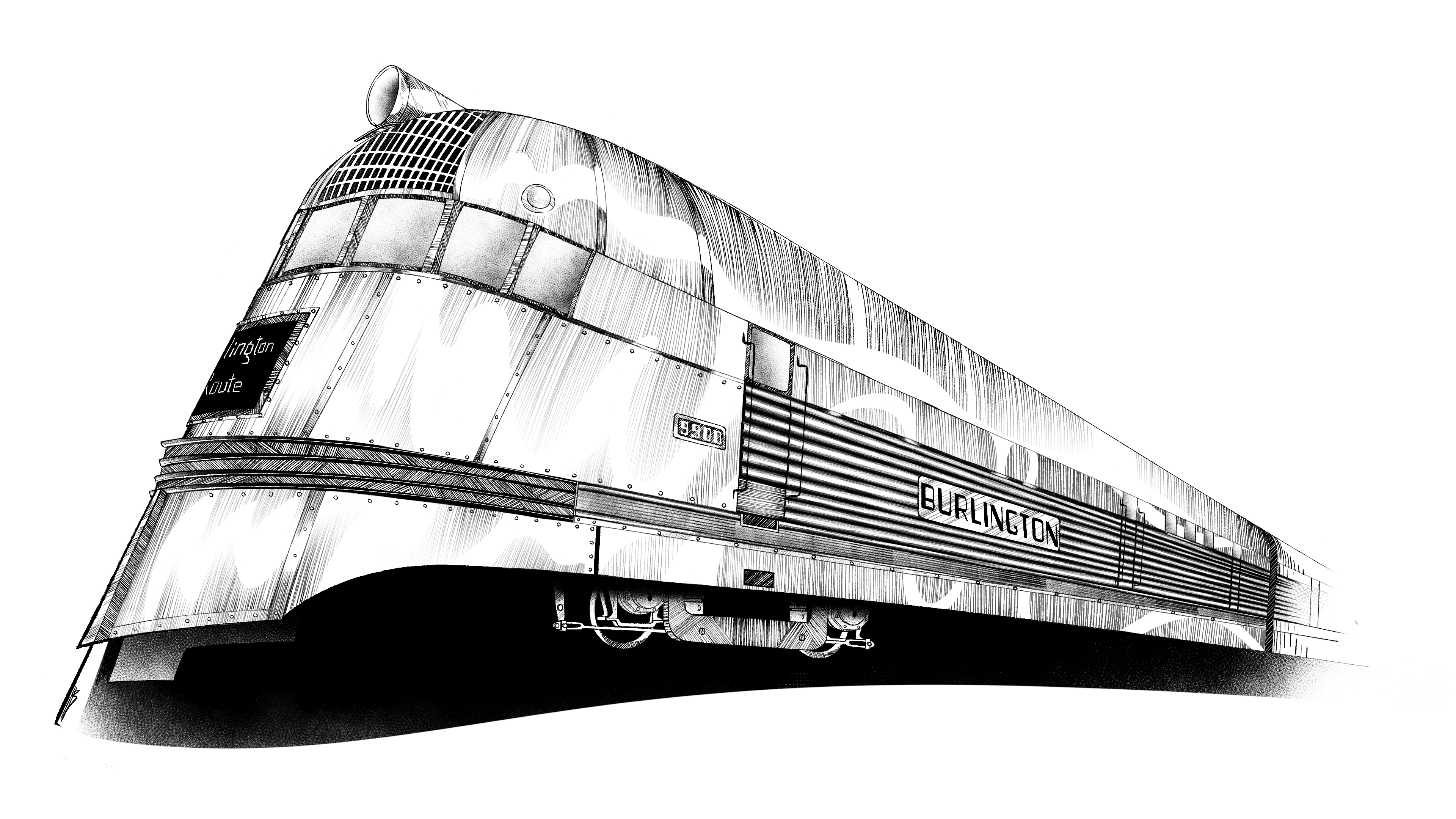
- Built: April 7th, 1934 by The Budd Manufacturing Company
- First service: November 11th, 1934
- Retired: March 20th, 1960
- Preserved: May 26th, 1960
The Chicago, Burlington, and Quincy Railroad’s No. 9900, the Burlington Zephyr – later renamed the Pioneer Zephyr – was the first diesel-powered streamliner train in regular service in the United States, narrowly beating Union Pacific’s M-10000 to the title. It was intended to reinvigorate CB&Q’s passenger rail services which were facing competition from automobiles. Designed for speed and comfort, the train was engineered to be as lightweight as possible while featuring luxury amenities not so easily found on the roads.
The train debuted at the 1934 Chicago World’s Fair after completing its record-breaking non-stop Dawn-to-Dusk run that topped out at 112 miles per hour. It then went on a six-month-long exhibition tour and starred in the film The Silver Streak before entering revenue service on November 11th, 1934. The train was an immediate hit, not only becoming a popular icon in its own right but also having its Zephyr name and branding borrowed by other businesses and institutions to lend them the same air of modernity and ease.
The Burlington Zephyr was so successful commercially that the CB&Q ordered an entire fleet of stainless steel shovelnosed streamliners, each with its own identity. Two years into its service and three more Zephyr brothers later, the train was renamed the Pioneer Zephyr to differentiate it again. Traffic demand for the train often exceeded its small capacity and it was frequently moved to underperforming routes more suited to its ability, only to have to be replaced by larger trains when it grew too popular.
Remaining in service for twenty-six years, the Pioneer Zephyr was retired in 1960 and immediately donated to the Museum of Science and Industry where it has been on display since.
Chicago, Burlington and Quincy Railroad No. 9911-A “Silver Pilot”
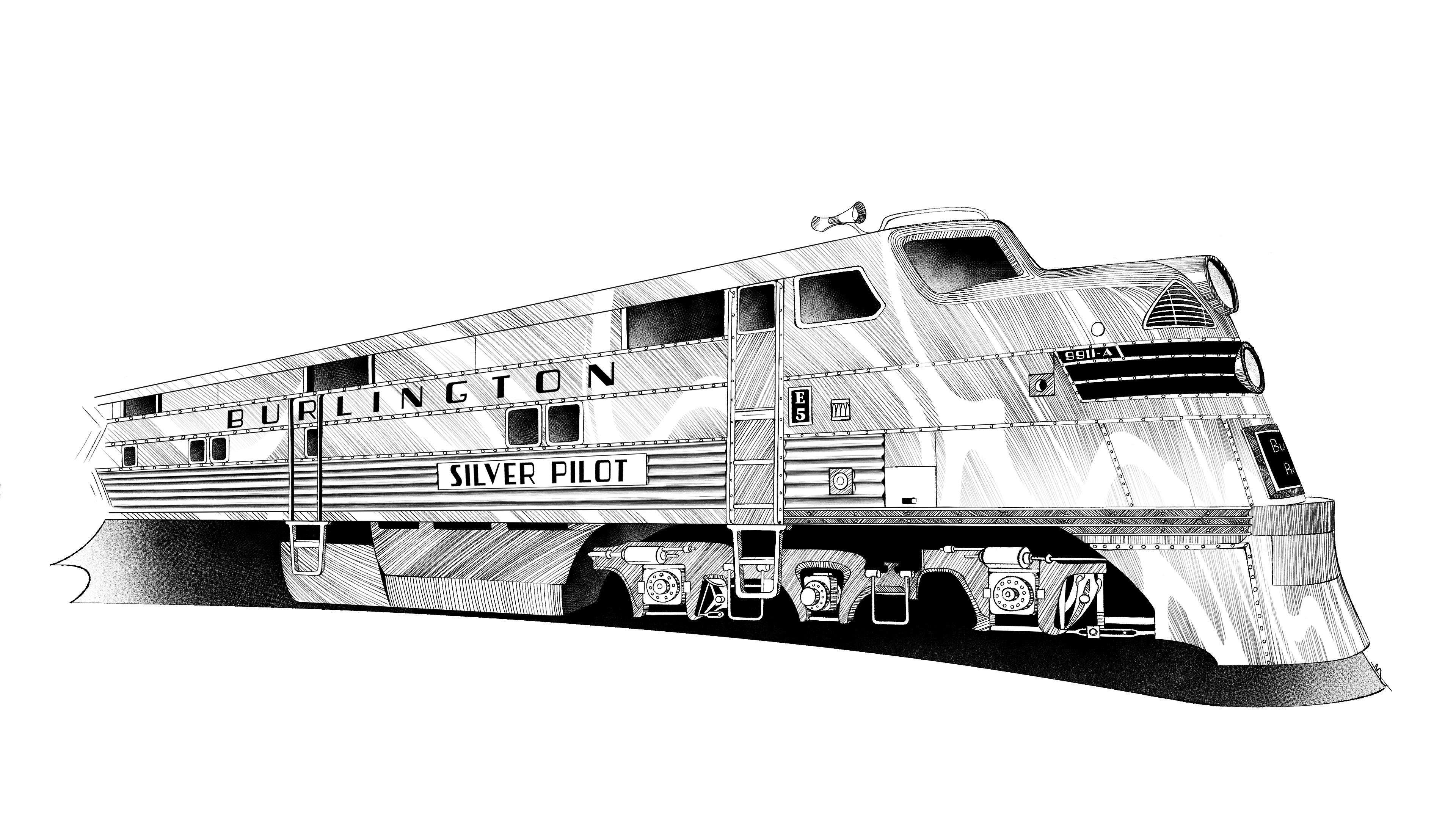
- Built: February 27th, 1940 by The Electro-Motive Corporation
- First service: Spring of 1940
- Retired: March 16th, 1968
- Preserved: October 1968
The Chicago, Burlington, and Quincy Railroad’s No. 9911-A “Silver Pilot” is the last remaining of the sixteen E5 diesel locomotives manufactured by the Electro-Motive Corporation in 1940 and 1941. Successors to the nine original shovelnose Zephyr engines, the E5 “slantnoses” were unique amongst the E-units that came before and after for their fluted stainless steel exterior, designed to match the streamlined Budd cars they were built to pull.
“Silver Pilot” and its B-unit, “Silver Mate”, were designated CB&Q 9911-AB and initially assigned to the Q’s Exposition Flyer, the Fast Mail, and the Ak-Sar-Ben Zephyr. In July 1955, the pair were sold along with five other E5s to subsidiaries of the CB&Q: first to Fort Worth & Denver and then very quickly to Colorado & Southern, who was in a better financial position to take them on. Renumbered 9952-AB, both E5s would frequently be assigned to the Texas Zephyr (which was the name applied to Silver Pilot’s left and right nose flanks), the Sam Houston Zephyr, and the Denver-Dallas trains No. 7 and 8. They worked there until the Texas Zephyr was discontinued in September 1967.
“Silver Pilot” and “Silver Mate” would briefly reenter service with four other E5s in November 1967, hauling low-speed drag freight; work for which they were not designed and which would render many of them completely inoperable. “Silver Pilot” or “Silver Mate”, however, were still operational when they were sent to Pielet Bros. Scrapyard in McCook, IL for trade-in credit with next-door EMD in March 1968.
Sometime in 1968, Herb Hansen, the then-president of the Illinois Railway Museum, negotiated with Pielet Bros. and EMD to purchase “Silver Pilot” to pull the museum’s recently-acquired Train of the Goddesses.
The engine and trainset, together as the Nebraska Zephyr, have since become the most popular attraction at the IRM, making several excursions off-property for events, mainline runs, and occasional appearances in films such as A League of Their Own and Flags of Our Fathers.
The Museum of Science and Industry
German Submarine U-505
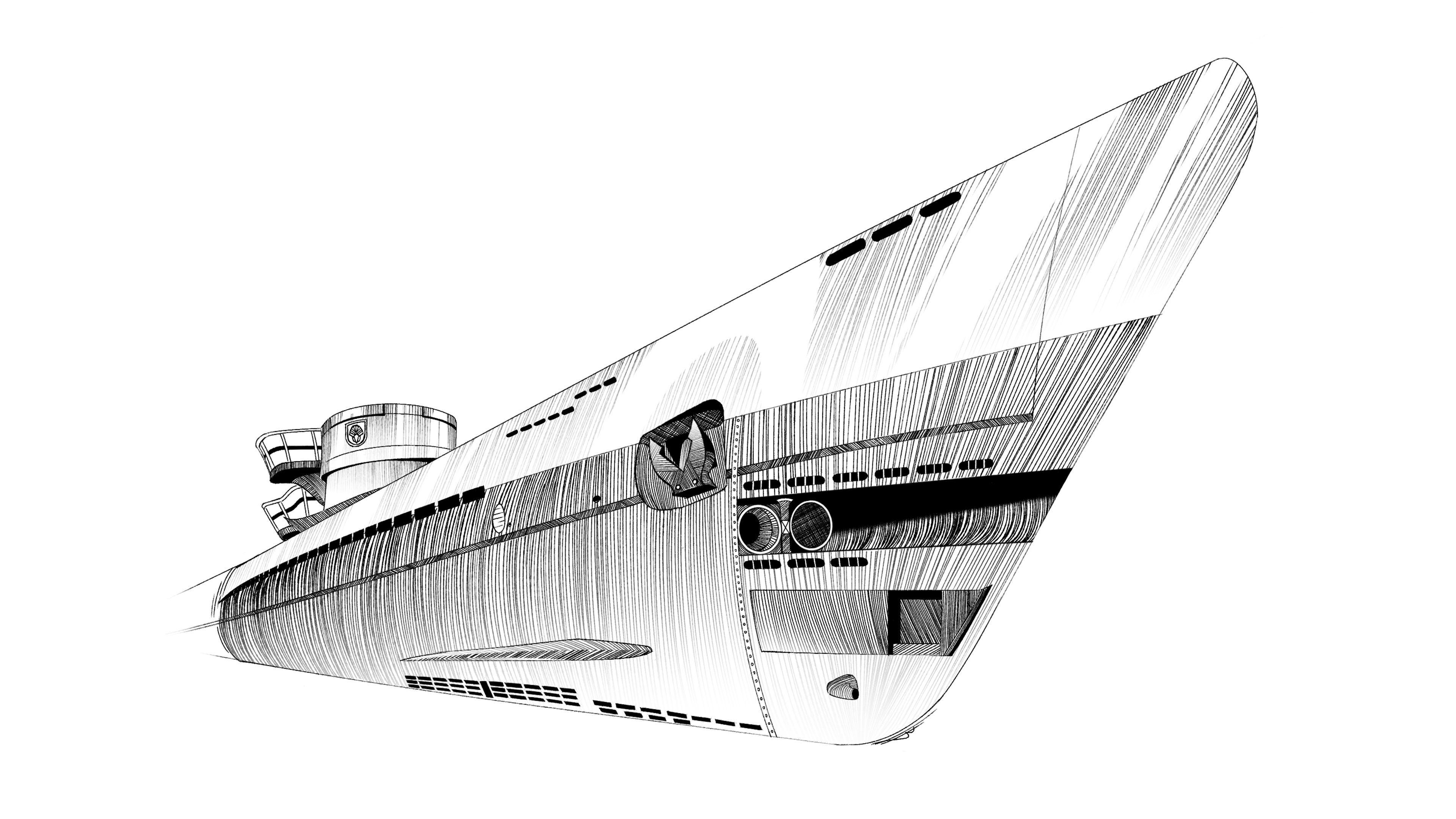
- Laid Down: June 12th, 1940 by Deutsche Werft
- Launched: May 24th, 1940
- Captured: June 4th, 1944
- Preserved: September 25th, 1954
German Type IXC submarine U-505’s career started out with three successful patrols in which it sunk eight merchant ships before its luck turned. It survived an aerial attack on its fourth patrol, but was badly damaged and had to return to its home port in Lorient, France. From there, it suffered several aborted patrols due to equipment sabotage from dockworkers working for the French Resistance. On its tenth patrol, it was spotted by British destroyer ships and forced to submerge to evade severe depth charge attacks. The ship’s captain, Kapitänleutnant Peter Zschech, succumbed to the stress of the attack and shot himself in front of his crew.
After a successful eleventh patrol in which it rescued thirty-three crew members from the sunk German torpedo boat T25, it was captured by the U.S. Navy on its twelth patrol. Task Group 22.3, commanded by Captain Daniel V. Gallery, hit it with depth charges, forcing it to surface. Its crew failed to scuttle the ship properly and the Navy was able to salvage and capture it.
U-505 was kept at a US Naval Operating Base in Bermuda for study, where it was painted to look like a U.S. submarine and referred to as the USS Nemo to hide that it had been captured rather than sunk. At the end of the war in Europe when its capture no longer needed to remain secret, U-505 went on a short exhibition tour along the Atlantic coast to sell war bonds for the continuing war in the Pacific. While most U-boats were scuttled or scrapped two years from Germany’s surrender, per Operation Deadlight, Captain Gallery successfully argued that U-505 was exempt, having been captured prior to the end of the war and not surrendered after.
After its warbond tour, U-505 was left moored at the Portsmouth Navy Yard where it remained there for nine years until the Navy determined it had no further use for it. They intended to use the ship for gunnery and torpedo practice until it sank, but Captain Gallery instead campaigned to have the Museum of Science and Industry (who had expressed the wish to display a submarine) take U-505 instead. The Navy gave the ship to the museum as a donation, while Chicago residents raised the $250,000 needed for its transport.
Ironically, owing to its debatable fortunes during the war, U-505 is now one of only five surviving U-boats today.
New York Central and Hudson River Railroad No. 999
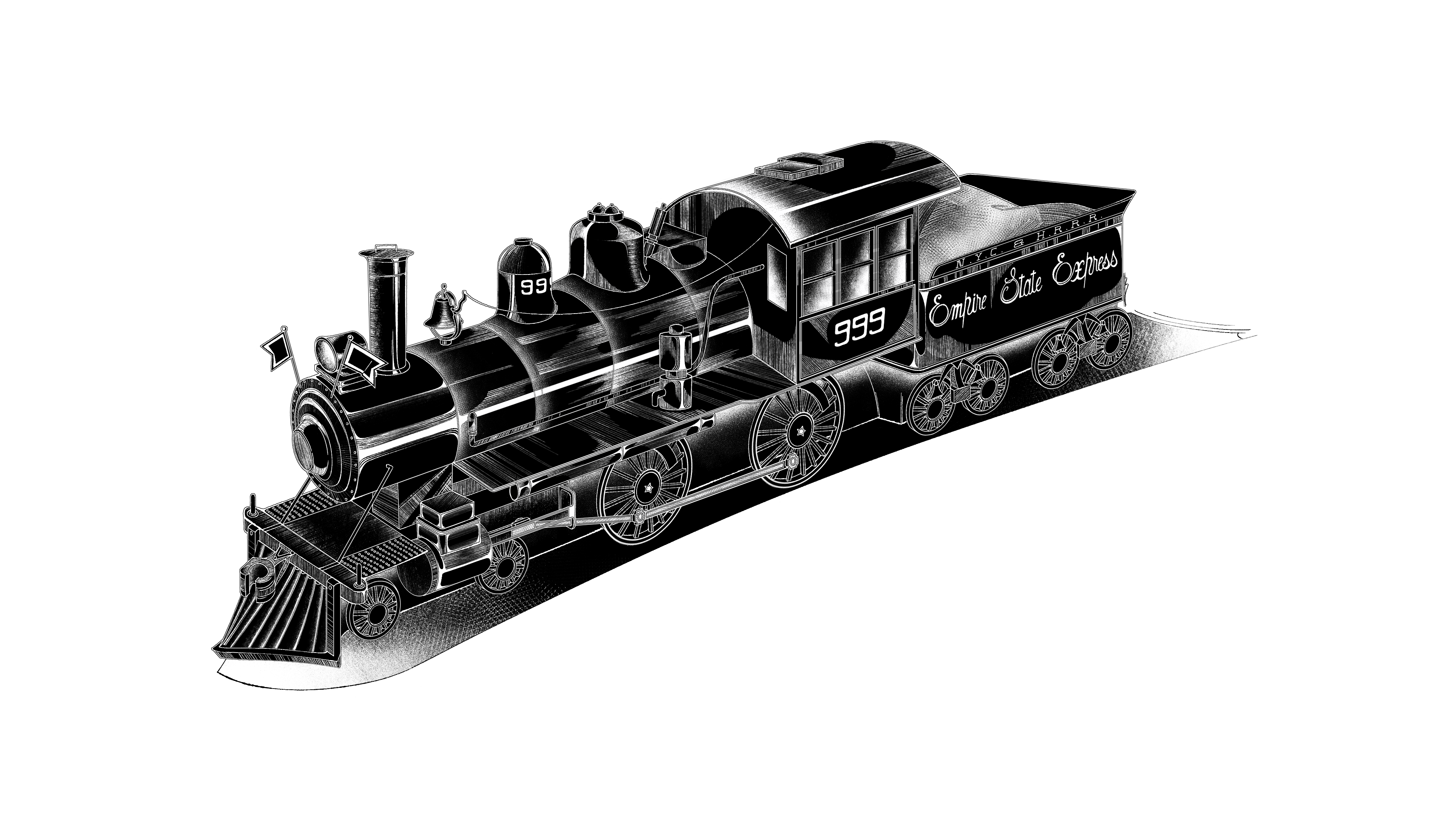
- Built: 1893 by New York Central’s West Albany Shops
- First Run: May 1893
- Retired: May 1952
- Preserved: 1962
No. 999 is a 4-4-0 steam locomotive built by the New York Central and Hudson River Railroad for their passenger express service, the Empire State Express which ran from Syracuse to Buffalo. With 86-inch drive wheels the engine was capable of incredible speeds for the time. Using mile markers along the track to measure, the engine was said to have achieved a top speed of over 100 mph on May 10th, 1893; The first locomotive, supposedly, ever to do so.
The publicity from the stunt made the engine world famous. It was exhibited that same year at the Columbian Exhibition in Chicago as the fastest engine in the world, after which it would return to regular service, though it had its 86-inch drivers refitted with smaller 70-inch ones to curb wheel-slippage when handling longer trains.
Over the course of its service life, 999 would regularly tour and be displayed at fairs and exhibitions, including the Baltimore and Ohio Railroad’s “Fair of the Iron Horse” in 1925, Chicago’s “Century of Progress” Fair in 1933-34, the New York World’s Fair in 1939, and the Chicago Railroad Fair in 1948-49. In 1952, the engine was retired from passenger service after reenacting its record-breaking run, and subsequently demoted to yard-switching and delivering refridgerated milk cars.
Following the mass-adoption of diesel locomotives in the U.S. the NYC scrapped most of its steam motive power in 1957, but decided to preserve 999. It was donated to the Museum of Science and Industry in 1962, the last of the east lawn outdoor vehicle displays. In November 1993, the engine underwent complete cosmetic restoration and was moved inside where it now sits in the Transportation Hall.
Santa Fe (ATSF) No. 2903
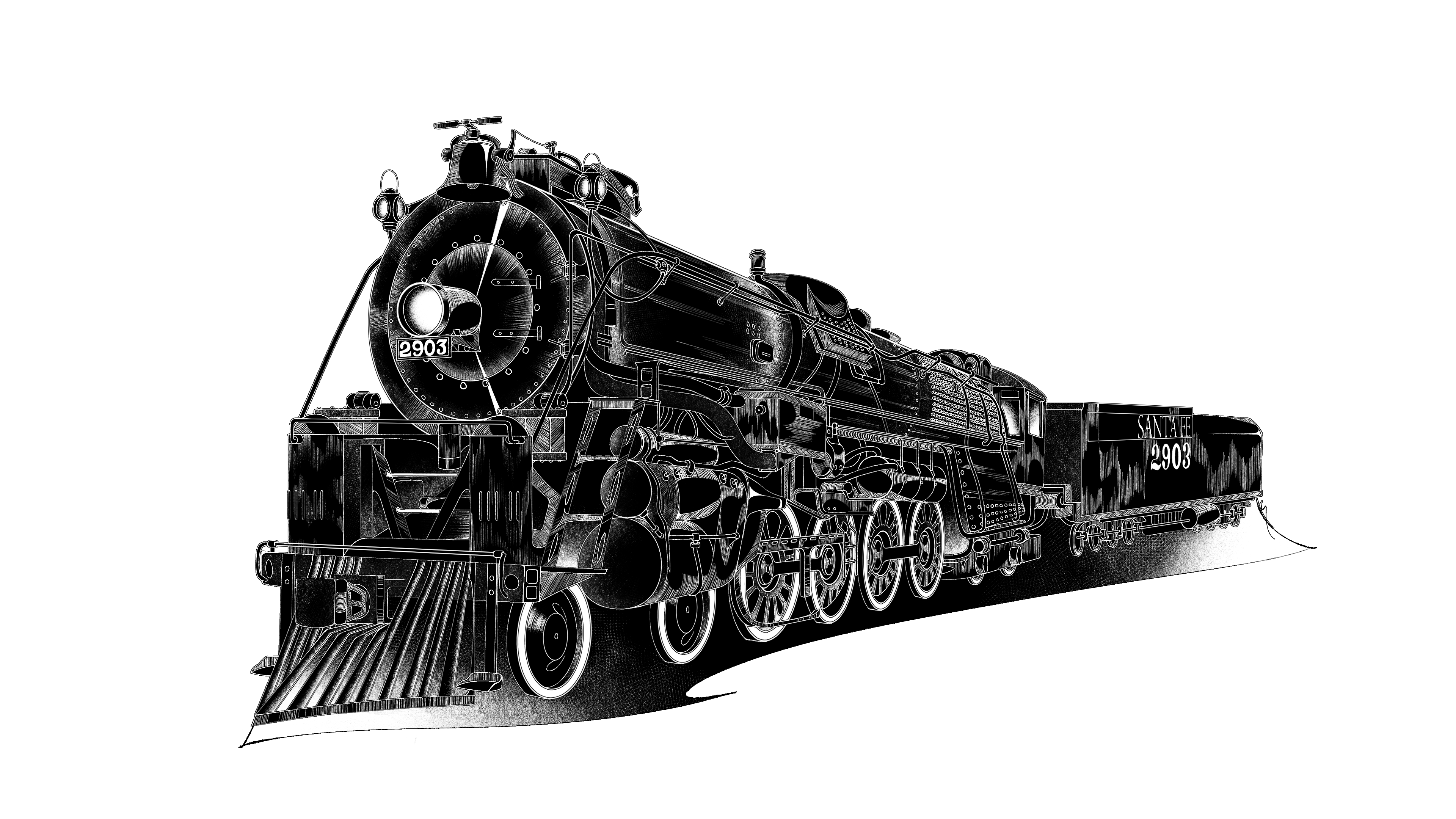
- Built: 1943 by The Baldwin Locomotive Works
- Reitred: 1955
- Preserved: 1961
Atchison, Topeka & Santa Fe No. 2903 was used for passenger trains and freight, excelling at both. It could pull twenty coaches at up to 90 miles an hour or it could haul one hundred freight cars at once. The 2900 class were also the heaviest 4-8-4s ever built, as a result of its carbon steel boiler substitution made for the usual nickel steel boiler due to material restrictions during World War II. The engine was retired in 1955 when the Santa Fe fully dieselized.
2903 was donated to the Museum of Science and Industry in 1961. Unlike its yardmates, who were given indoor exhibits the 90’s and 00’s, 2903 was too heavy to be moved inside the building. It was instead donated to the Illinois Railway Museum, where it is now the largest preserved engine in their collection. It also appeared alongside “Silver Pilot” in the movie Transformers: Age of Extinction.
Stephenson’s “Rocket” replica
- Built: 1935 by Robert Stephenson and Company
The original Stephenson’s “Rocket” was built for the 1829 Rainhill Trials to test the viability of mobile steam locomotives over stationary steam engines that would pull passenger cars on ropes or chains. Not only were the Rainhill Trials a test of theory, but also a competition of engine builders. Ten engines were submitted to compete, but ultimately, Stephenson’s “Rocket” was the only one able to complete the race at all, earning its place in history.
The original “Rocket” is preserved currently at Locomotion in Shildon, England. Owing to having preserved its original plans as well, there are many replicas that have been built since. However, there are three “Rocket” replicas that enjoy a pedigree, having been built by the Stephenson Works themselves in the late 20’s and early 30’s for the United States: a stationary model that demonstrates its wheel and piston movement for the MSI, a bisected model to demonstrate the internals for the Museum of the Peaceful Arts in New York City, and a fully operational replica commissioned by Henry Ford and now preserved at the Henry Ford Museum in Dearborn, Michigan. This last model performed in the Wheels-a-Rollin’ Pageant at the Chicago Railroad Fair with the Pioneer Zephyr and NYC No. 999.
The Illinois Railway Museum
Chicago, Burlington and Quincy Railroad
Nebraska Zephyr (Train of the Goddesses)
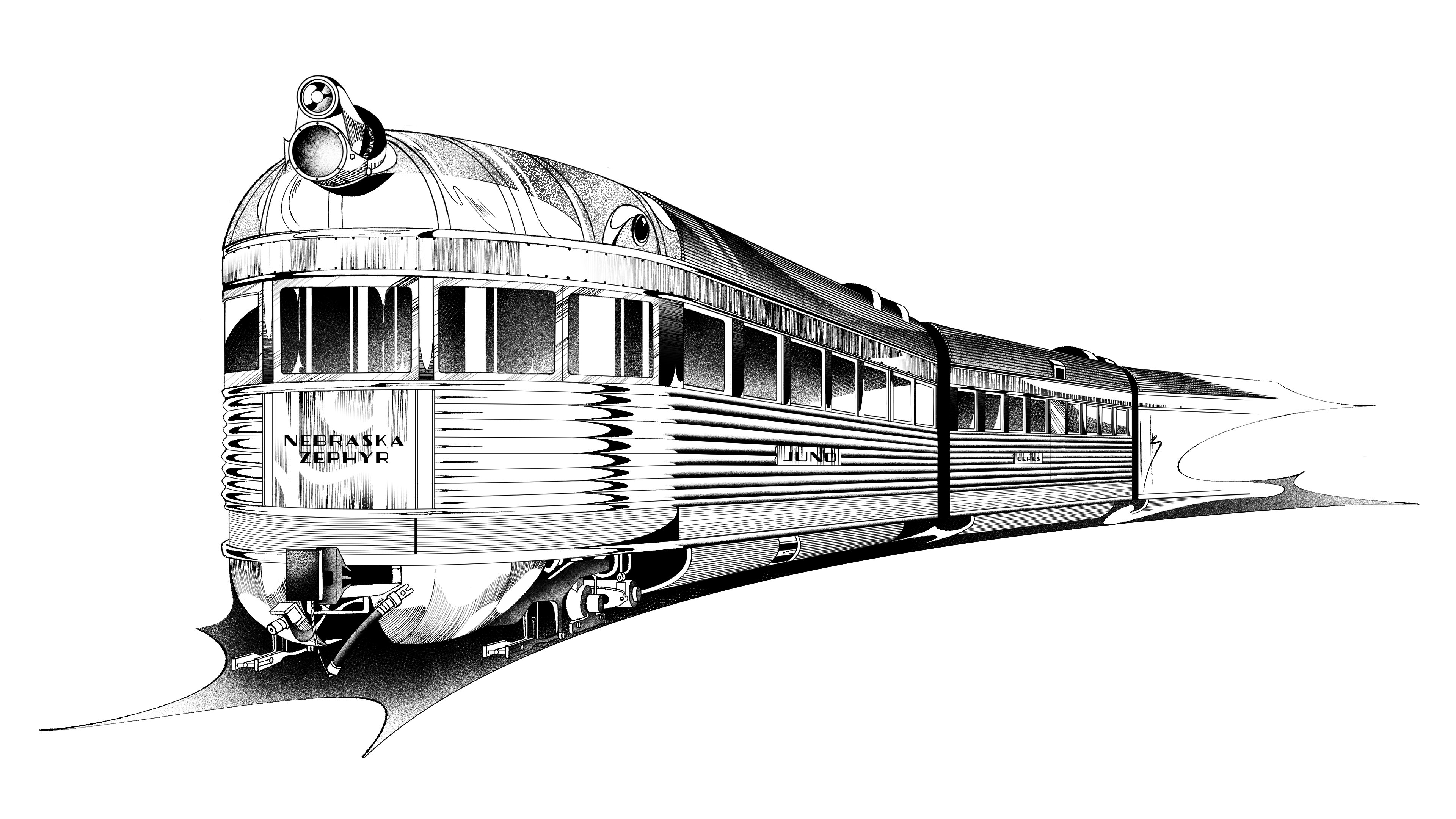
- Built: Autumn 1936 by The Budd Manufacturing Company
- First service: December 18th, 1936
- Retired: January 21st, 1968
- Preserved: June 1968
The Train of the Goddesses was one of two streamlined articulated trainsets built for the Chicago, Burlington & Quincy Railroad’s passenger service train, the Twin Cities Zephyr (later renamed to the Nebraska Zephyr in 1968). The second set was called The Train of the Gods and had nearly indentical equipment named for male gods. Unlike its predecessors, these were the first of the Budd streamliner trainsets where the engines were not part of the articulated consist, allowing them to be more easily swapped out for maintenance.
The Train of the Goddesses was pulled by engine No. 9904 “Pegasus” and consisted of seven cars in total: “Venus” (auxillary power car and cocktail lounge), “Vesta” (coach), “Minerva” (coach), Psyche (dinette-coach), “Ceres” (dining car), “Diana” (parlor car), and “Juno” (observation lounge). In 1963, “Psyche” and “Diana” were removed from the consist and scrapped due to lower passenger demand.
The Train of the Goddesses was retired and sold to a private owner in 1968, then resold and subsequently donated to the Illinois Railway Museum the same year. Pulled by “Silver Pilot”, the whole train now runs as the Nebraska Zephyr, taking visitors on short trips along the museum’s main line throughout the year. It has also appeared in the films A League Of Their Own and Flags Of Our Fathers.
J. Neils Lumber Company 5
- Built: 1929 by Lima Locomotive Works
- Retired: 1964
- Preserved: Fall 1965
J. Neils Lumber Company 5 is a 3-truck Shay locomotive built for hauling logs and lumber for paper manufacturing. It worked at several logging companies during its 35-year service life including the J. Neils Lumber Company, the St. Regis Paper Company, and Klickitat Log & Lumber. Being a geared locomotive, it is slow but incredibly strong.
Donated to the Illinois Railway Museum in 1965, the engine pulled the museum’s first steam excursion on October 29th, 1967 and continued to operate until it was retired in 1999 for repairs. In 2018 it was fully restored and certified by the Federal Railroad Administration for operation and returned to regular service. Due to its substantial pulling power, the engine works at the museum as both a passenger train for visitors and as a shunter for static displays when the need arises.
St. Louis-San Francisco No. 1630
- Built: 1918 by Baldwin Locomotive Works
- First service: 1920
- Retired: 1967
- Preserved: August 1967
Built by Baldwin Locomotive Works in 1918, the order for this locomotive had originally been placed in 1917 by the Russian government for use on their railways. By the time the decapod had been built, the Bolshevik Revolution had taken place and the engine could not be delivered. It was instead sold to the St. Louis — San Francisco Railroad – more commonly known as the Frisco – where it was used to haul both passengers and freight. In 1951, the engine was sold to the Eagle-Picher Mining Company until it was retired in 1967. In July of that year, it was moved from Oklahoma to the IRM where it has remained ever since.
Work began on restoring the engine in 1972 and by 1974, it operated regularly on the museum track until 2004 when it was taken out of service to undergo repairs and a rebuild to bring it in line with federal guidelines. In 2013, the engine was fully restored and by Memorial Day 2014, it returned to regular excursion service.
Like many of the engines at the IRM, the 1630 has appeared in several films and television shows including A League Of Their Own alongside the Nebraska Zephyr as well as in 1991’s The Babe.
Tuskegee No. 101
- Built: 1918
- Retired: 1969
- Preserved: 1969
A Baldwin locomotive built in 1924, Tuskegee 101’s distinctive 2-6-2 wheel arrangement is commonly referred to as a “Prairie” type, so-called because of their initial use, intended for traversing the relatively flat Midwestern prairies around the turn of the century. The design remained popular with smaller railroads like the Tuskegee, who continued to use them to pull both freight and passengers along their short lines.
Tuskegee 101 arrived at the IRM in 1969 and was a mainstay of the operational steam engine fleet for many years before being retired from excursion service in 1989.
Commonwealth Edison 5
- Built: 1922 by Baldwin Locomotive Works
- Retired: Mid-1950’s
- Preserved: 1972
The only surviving steam engine from the Commonwealth Edison Railways, CE 5 is a Baldwin 0-6-0 locomotive built for low-speed switching and hauling work. In service at the Calumet generating station in Chicago, it would have pulled heavy coal trains for use around the power plant. Having a steam engine that ran on the same coal used to power the generators at the plant may have made the engine more flexible than the electric engines used at other ComEd facilities. Retiring in 1964, it was privately owned until arriving at the Illinois Railway Museum sometime in 1971.
Though it was operational and pulling excursion trains for a time at the museum, even taking part in the museum’s first and only steam triple-head in 1971 alongside the Shay 5 and Tuskegee 101, its weight and short wheelbase was hard on the museum tracks and it was eventually retired in 1974, serving as a display engine only.
Chicago Transit Authority No. 9553 and No. 9631
- Built: 1951 by Marmon-Herrington
- Retired: March 25, 1973
- Preserved: July 11, 1973
When the Chicago Transit Authority ended trolley bus service in March of 1973, CTA 9553 and 9631 were selected by IRM staff for preservation. Before being sent to the museum, they were also chosen to run during a special fantrip in April of that year, sneakily giving them the distinction of being the last operating CTA trolley buses.
9553 serviced mostly South Side routes before being moved to the North Ave Garage, which 9631 also operated out of until both were retired. Both buses are complete and operational.
Illinois Terminal No. 415
- Built: 1924 by the St. Louis Car Company
- Preserved: 1956
A small and lightweight interurban car built for long-distance service between Chicago and Princeton, later rebuilt for short-haul service in the mid-1930s. In 1966, it became the first car to operate at the IRM’s new location in Union, IL.
Indiana Railroad No. 65
- Built: 1931 by Pullman-Standard
- Retired: 1953
- Preserved: 1953
The first car ever preserved by the IRM. The car’s motorman, Howard Odinius, wanted to purchase it for himself after its retirement in 1941, but couldn’t raise the funds to do so at the time. Unable to bear seeing it scrapped, he contacted the Cedar Rapid & Iowa City interurban line and persuaded them to purchase the car and add it to their roster. For the next 12 years, IR 65 operated on the CRANDIC as car number 120.
When the CRANDIC ended passenger service, Odinius and a group of ten others each contributed $100 to buy IR 65 and together founded the Illinois Electric Railway Museum in 1953. IR 65 has since been fully restored and operates at the IRM to this day.
Chicago Transit Authority No. 1204
- Built: 1898 by Pullman
- Retired: 1958
- Preserved: 1958
Now known as Northwestern Elevated 24, this is the oldest preserved L car at the IRM, this car operated under several different names and numbers over its 60-year service life.
Different from the other wood-bodied L cars at the museum, 1024 has longitudinal interior seating and possesses wooden gates rather than doors at each end, earning these types of cars the nickname “gate-cars”.
Chicago Transit Authority No. 1268 and No. 1808
- Built: 1907 by American Car & Foundry Company
- Retired: 1955
- Preserved: 1958
Built as wood-body L cars in 1907, CTA 1268 and 1808 started their service life identically until 1808 was rebuilt in 1913 as a motorized car, meaning it could move on its own.
While 1268 has been fully restored, 1808 is still undergoing restoration as of 2025. Both are operational and run frequently on the trolley line.
Milwaukee Road No. 265 (Old Smokey)
- Built: 1944 by ALCO
- Retired: 1956
- Preserved: 1975
Old Smokey is a 4-8-4 ALCO steam engine designed for mixed-traffic use during WWII. Like ATSF 2903, it was in service only a short time before it was retired to make way for the Milwaukee Road’s eventual switch to diesel locomotives.
For several years, this engine was on display in the city of Milwaukee where it earned the nickname Old Smokey (spelled “Smoky” on its original outdoor exhibit sign). The land the engine sat on was eventually earmarked for a new highway and the city donated the engine to the IRM in 1975.
Chicago Transit Authority No. 4391 (Green Hornet)
- Built: 1948 by St. Louis Car Company
- Retired: 1959
- Preserved: 1959
No. 4391 is the only surviving Presidents’ Conference Committee (PCC) streetcar of Chicago Surface Lines’ postwar fleet. 600 of these cars (as a class nicknamed “Green Hornets”) were ordered to modernize the high-traffic streetcar lines, while the more lightly trafficked lines would be replaced with buses. However, when the CTA took over the streetcar transit in the city, it elected instead to replace all streetcar operations with buses. Consequently, all the PCC cars were retired after only ten years of service. 4391 was acquired by the Electric Railway Historical Society and remained in their collection until 1973 when the borrowed land they housed their collection on was to be sold, at which point it was decided to give the ERHS streetcar collection to the IRM.
Nevada Northern No. 101 “Ely”
- Built: 1889 by Pullman/Pullman-Standard
- Retired: 1962
- Preserved: 1962
“Ely” is a private car that was used by railroad presidents as a traveling office and parlor for entertaining guests. “Ely” is notable for its ornate furnishings, fixtures, and its open-rear platform. Originally built for the Plant System railroad, it ran on the Savannah Florida & Western until being sold to the Nevada Northern in 1906 where it remained in their service until 1946. It saw seventeen years more service on other railways before being retired and donated to the Illinois Railway Museum.
Illinois Terminal No. 101
- Built: 1917 by Aemrican Car Company
- Retired: 1956
- Preserved: 1956
A rare center entrance interurban car, IT 101 operated between St. Louis, Missouri and Alton, Illinois its entire service life. It’s recognized by its lime green and butter yellow livery.
Norfolk & Western No. 2050
- Built: 1923 by American Locomotive Company
- Retired: 1959
- Preserved: 1976
Like “Silver Pilot”, No. 2050 also escaped the scrapyard… though not before serving in it for seventeen years. Originally meant to be taken apart, it instead found work as a portable boiler at the facility and endeared itself to the workers there. They kept the engine around as a static display, even writing it a poem in chalk on its tender. Eventually, she was sought after by multiple museums, but the IRM won out for its expertise in moving engines and its budget to do so.
Pullman 1792 (D.D.’s Delight)
- Built: 1928 by Davenport Locomotive Works
- Preserved: 1975
Powered by gasoline rather than diesel fuel, Pullman 1792 is one of the oldest internal combustion engines at the IRM, as well as one of the oldest remaining engines from the Davenport Locomotive Works. It served as a switching locomotive at the Pullman manufacturing plant in Chicago.
Chicago & Western Indiana No. 1900
- Built: 1906 by Industrial Locomotive Works
- Preserved: 1968
No. 1900 is steam-powered “wrecker” crane, heavy-lifters often used to clean up and right heavy engines after derailments. Ironically, it is not self-propelled and must be brought to the scene of an accident by a locomotive.
Shovelnoses
Chicago, Burlington and Quincy Railroad No. 9901
- Built: March 1935
- First Service: April 21st, 1935
- Destroyed: By fire in Dacus, Texas on December 19th, 1944.
- Scrapped: December 1944
After No. 9901 and No. 9902’s exhibition and speed runs (featuring plenty of play on their being twins), they entered revenue service on the Twin Cities Zephyr Chicago-Minneapolis route. Together, they would both run the route twice a day from opposite ends, a practice that came to be known as the Morning Zephyr and the Afternoon Zephyr. 9901 and 9902 held this route for seven months until demand exceeded their carrying capacity and they were replaced by No. 9904 “Pegasus” and No. 9905 “Zephyrus” with their new six-car trainsets. 9901 was then sold to CB&Q subsidiary Burlington-Rock Island to pull their Sam Houston Zephyr. The train was later joined at the B-RI by its twin and they shared duties between the Sam Houston Zephyr and the Texas Rocket.
Unfortunately, lax preventative maintainence caused an oil build-up around 9901’s trucks, igniting a fire that could not be contained. The blaze burnt the engine beyond repair and 9901 was stricken from the roster in 1944.
Chicago, Burlington and Quincy Railroad No. 9902
- Built: April 1935
- First Service: April 21st, 1935
- Retired: February 1954
- Scrapped: April 1956
After its shared early history with its twin 9901 and replacement on the Twin Cities Zephyr in 1936, CB&Q sold 9902 to subsidiary Alton-Burlington to run their Ozark State Zephyr in Missouri. After two years, 9902 was sold again to the B-RI to share the Sam Houston Zephyr and Texas Rocket routes with 9901. After 9901’s demise, B-RI returned 9902 to the CB&Q, where it was assigned the Chicago-Ottumwa route. Though the route was called the Zephyr 9902, the name followed the train when it was reassigned to the Chicago-Hannibal route. Due to its small size compared to the larger contemporary Zephyr trains, it was sometimes nicknamed the “Baby Zephyr”.
Chicago, Burlington and Quincy Railroad No. 9903
“Injun Joe” Mark Twain Zephyr
- Built: October 1935
- First Service: October 28th, 1935
- Retired: May 1958
- Sold: To Frank Dashner in June 1960
Chicago, Burlington and Quincy Railroad No. 9904
“Pegasus”
- Built: November 1936
- First Service: December 18th, 1936
- Scrapped: August 1957 at West Burlington
Like most Zephyr engines, “Pegasus” and its twin “Zephyrus” suffered from success. Built to replace the Twin Cities Zephyr trains, the two would find themselves also unable to meet the ever-increasing popularity of their route. Since these new engines had couplings and could be detached from their still-articulated trains, they were very shortly reassigned to lighter routes, with their intended one being covered by an “Æolus” or E5 instead.
While the train would go on to be reassigned as the Nebraska Zephyr, “Pegasus” and “Zephryus” were reassigned to the general passenger pool for Chicago suburban routes until they were converted into B-units in 1951.
Chicago, Burlington and Quincy Railroad No. 9905
“Zephyrus”
- Built: November 1936
- First Service:December 18th, 1936
- Scrapped: September 23rd, 1955 at West Burlington
Chicago, Burlington and Quincy Railroad No. 9906-AB
“Silver King” and “Silver Queen”
- Built: October 16th, 1936
- First Service: October 23rd, 1935
- Scrapped: June 1957 at West Burlington
Chicago, Burlington and Quincy Railroad No. 9907-AB
“Silver Knight” and “Silver Princess”
- Built: October 19th, 1936
- First service: October 23rd, 1935
- Scrapped: Knight was dismantled on November 20th, 1955. Princess was scrapped two years later in June 1957.
Chicago, Burlington and Quincy Railroad No. 9908
“Silver Charger” General Pershing Zephyr
- Built: March 1939
- First service: April 30th, 1939
- Retired: 1966
- Preserved: September 1966
E5s
Chicago, Burlington and Quincy Railroad No. 9909
“Silver Bullet”
- Built: March 1940
- Scrapped: March 15th, 1968
Chicago, Burlington and Quincy Railroad No. 9910-AB
“Silver Speed” and “Silver Power”
- Built: February 1940
- Scrapped: October 31st, 1967
Chicago, Burlington and Quincy Railroad No. 9911-B
“Silver Mate”
- Built: February 27th, 1940 by The Electro-Motive Corporation
- First service: Spring of 1940
- Retired: March 16th, 1968
- Scrapped: Summer 1968 at Pielet Bros. Scrap Iron and Metal Company
Chicago, Burlington and Quincy Railroad 9911-B “Silver Mate” was “Silver Pilot”‘s B-unit.
B-units, also called cabless or booster units, were designed to supplement diesel-powered engines’ power output. In scenerios in which diesels were being used to replace steam engines, multiple units were often needed to meet the required strength. B-units were slightly cheaper to purchase and operate because they lacked controls and crew facilities. Unions therefore could not require that they be staffed, making them a tidy solution to the need for more motive power without hiring more labor.
“Silver Mate” was manufactured with “Silver Pilot” and the two units were kept matched throughout their service life. They worked for the Chicago, Quincy and Burlington Railroad as No. 9911-AB, briefly for the Fort Worth and Denver Railway as No. 9982-AB, and the Colorado and Southern Railway as No. 9952-AB (the number “Silver Pilot” would retain until the early 90’s).
“Silver Mate” was retired along with “Silver Pilot”, but was scrapped alone in 1968. It is unknown to us presently whether “Silver Mate” was not wanted or if it was scrapped before an offer was made for “Silver Pilot”.
Chicago, Burlington and Quincy Railroad No. 9912-AB
“Silver Meteor” and “Silver Comet”
- Built: March 1940
- Scrapped: March 1965
Chicago, Burlington and Quincy Railroad No. 9913
“Silver Wings”
- Built: October 1940
- Scrapped: March 15th, 1968
Chicago, Burlington and Quincy Railroad No. 9914-A
“Silver Arrow”
- Built: June 1941
- Scrapped: March 15th, 1968
Chicago, Burlington and Quincy Railroad No. 9914-B
“Silver Swift”
- Built: June 1941
- Retired: Wrecked at Nodaway, Missouri August 8th, 1960
- Scrapped: December 1960
Chicago, Burlington and Quincy Railroad No. 9915-A
“Silver Carrier”
- Built: June 1941
- Scrapped: March 1965
Chicago, Burlington and Quincy Railroad No. 9915-B
“Silver Clipper”
- Built: June 1941
- Scrapped: March 1965
Colorado and Southern No. 9950-AB
“Silver Racer” and “Silver Steed”
- Built: March 1940
- Scrapped: Steed was traded in on October 31st, 1967 while Racer was traded in on March 15th, 1968
Fort Worth and Denver No. 9980-AB
“Silver Chief” and “Silver Warrior”
- Built: February/March 1940
- Scrapped: Chief was scrapped November 27th, 1963 at Childress, Texas.
- Retired: Warrior was traded in on March 15th, 1968.
Other Engines and Stock
Union Pacific M-10000 City of Salina
- Built: January 1934 by The Electro-Motive Corporation
- First Service: January 31st, 1935
- Retired: December 16th, 1941
- Scrapped: April 10th, 1942 at Ferer Junkyards
Originally known as Union Pacific M-10000 (the ‘M’ standing for motorcar), this trainset was the first streamlined passenger train delivered in the United States. Breaking the land speed record with a 110 mph sprint during its exhibition tour in early 1934, it was quickly overshadowed by the Burlington Zephyr’s record breaking Denver-Chicago run that ended at the Century of Progress fair in Chicago where both engines were exhibited as the future of passenger rail travel.
M-10000 entered service proper at the start of 1935 as The Streamliner, and later the City of Salina when it became one of a fleet of UP streamlined trains, all named after the cities they serviced. Other nicknames for the train were Tin Worm and Little Zip. It starred as a supporting character in a 1937 children’s book titled “Choo Choo: The Story Of An Engine Who Ran Away”.
By 1941, the motor was in need of replacement. Deeming the cost to be too expensive, it was pulled from service and scrapped in 1942. The aluminum from the trainset was sold to the US governement and said to have been recycled to build planes for the war effort.
Maine Central Railroad – Boston and Maine Railroad
No. 6000 Flying Yankee
- Built: February 1935
- First service: April 1st, 1935
- Retired: May 7th, 1957
- Preserved: 1957
The only shovelnose to work outside of the CB&Q, No. 6000 ran on the Maine Central Railroad – Boston & Maine Railroad for twenty-two years under various names including The Cheshire, The Minuteman, The Mountaineer, and The Business Man, but most famously as The Flying Yankee. The trainset was nearly indentical to the Pioneer Zephyr, save for its additonal seating in place of a railway post office. Post-retirement, it was donated to the Edaville Railroad in Carver, Massachusetts where it was placed on static display for thirty-five years. In 1993, the train was purchased by Bob Morell, owner of Story Land amusement park, and moved the Glen, New Hampshire.
The trainset was taken to the Concord and Claremont shops for structural restoration in 1997. The work was completed in 2004, but left interior restoration yet to be done. Involved parties were optimistic that the trainset could be made to operate again. On August 10th, 2005, it was moved the Hobo Railroad in Lincoln, New Hampshire and placed on static display. Further restoration efforts, however, stalled out at this point.
The Flying Yankee was purchased from the state of New Hampshire by the Flying Yankee Association in 2024 with intent to move it to the Conway Scenic Railroad and restore it to operational condition and limited serivce. You can learn more and help with those efforts at flyingyankee.org.
Texas and Pacific No. 100 (Silver Slipper)
- Built: October 1933
- Scrapped: October 1935
The last of the Budd-Micheline railcars, this trainset differed from its sisters in that it had a pair of American LaFrance gasoline engines and Michelin’s rubber wheels were only used on its underpowered trailers. It was given the dubious nickname of “Silver Slipper” due to its habit of derailing. Considered a failure, the trainset was scrapped within two years. However, its stainless steel fluted panelling lived on in subsequent Budd designs and is carried on in modern train car designs to this day.
Chicago, Burlington and Quincy Railroad No. 191 “Silver Inn”
- Built: 1938 by The Budd Manufacturing Company
- Destroyed: 1946 in the Naperville train disaster
“Silver Inn” was a stainless steel streamlined lightweight diner car that was unfortunately near the end of the Advance Flyer when the Exposition Flyer rear-ended it. The only car on the train not built to the current strength standards, it was unfortunately destroyed in the collision with multiple casualties.
Chicago, Burlington and Quincy Railroad No. 199 “Silver Inn”
- Built: 1952 by The Budd Manufacturing Company
A second “Silver Inn” diner car was built in 1952, the only example of a piece of stainless steel equipment being given a duplicate name.
Chicago, Burlington and Quincy Railroad No. 4000 and 4001
“Æolus”
- Built: Late 1930/Summer 1937 – February 1938
- First service: April 11th, 1937
- Retired: Mid-1950’s
- Scrapped: October 1960, 4001 is sold for scrap.
- Preserved: August 19th, 1963, 4000 is donated to the city of Lacrosse, Wisconsin for permanent display in Copeland Park.
There were two “Æolus”.
The first, No. 4000 was built in 1930 and began its service life as No. 3002, one of several S-4 Hudson steam locomotives. It was chosen for the task of covering the Twin Cities Zephyr and Denver Zephyr merely because it was due for service at the time. Streamlined and clad in stainless steel “shrouds”, the engine was delivered in April of ’37, renumbered No. 4000, and reclassed as a S-4-A Hudson to connote the upgrades it was given. When it was not covering for one of the shovelnoses, 4000 pulled the Black Hawk.
A second “Æolus” was ordered a couple months later. However, this engine was to be built from component parts rather than out of a stock locomotive. Delivered in February of 1938, No. 4001 had some improvements over its older twin, although 4000 was eventually given these modifications as well. Together, 4000 and 4001 pulled the Black Hawk, covered the heavier Zephyr trains, and did brief summer stints as the Overnite Denverite and the Aristocrat respectively.
Both engines had their shrouds removed and were placed into pool service in late 1940, as the railroad now had plenty of coverage for the Zephyrs in their newer fleet of E5s. Both steam engines worked odds jobs until their retirement in the mid-50’s.
4001 was subsequently sold for scrap in 1960, but 4000 was donated to the city of Lacrosse, Wisonsin and is now on static display outside Copeland Park.
Galena and Chicago Union Railroad “Pioneer”
- Built: 1837 by Baldwin Locomotive Works
- Retired: 1875
- Preserved: 1972
“Pioneer” was the first locomotive to operate in Chicago. Originally serving on the Utica and Schenectady Railroad under the name “Alert”, it was bought by the G&CU where it was renamed “Pioneer”. In 1950, it was loaned to the CB&Q to lay the first railroad track in Chicago. Returning to the G&CU, it continued service even as the railroad was merged into the Chicago & North Western Railway, until it was retired in 1875. It continued to make public appearances at World’s Fairs and railroading events until 1972 when it was donated to the Chicago historical Society and put on permanent display in the Chicago History Museum.
Santa Fe (ATSF) No. 811
- Built: 1901 by Burnham, Williams & Co.
- Preserved: 1954
Santa Fe No. 811 is a steam freight locomotive that was donated to the City of Atchison, Kansas in 1954 where it became a local attraction. Originally, it was placed in a park, but when the land was sold, the town spent years trying to decide what to do with their well-loved engine. It was eventually moved a few blocks down the street to its current location next to the historic freight depot building which has been made into the Santa Fe Depot Museum.
Chicago, Burlington and Quincy Railroad No. 3001
- Built: 1901 by The Baldwin Locomotive Works
- Preserved: August 1959
Another S-4 Hudson, CB&Q No. 3001 is the immediate older sister of the first “Æolus”, No. 4000. Donated to the city of Ottumwa, Iowa, the engine was placed on outdoor display in Ballingall Park behind the Ottumwa Amtrak station.
Chicago, Burlington and Quincy Railroad No. 4714 “Silver Dome”
- Built: June 1940 by The Budd Manufacturing Company
Originally a 52-seat coach named “Silver Alchemy”, this car was rebuilt in 1945 to become the first Vista-Dome car, “Silver Dome”.
Naval Ships
Christian Radich
- Laid Down: February 1937 by Framnæs Mekaniske Værksted
- Launched: June 17th, 1937
Originally built to train sailors for the Norwegian merchant navy, Christian Radich is a full-rigged, three-masted, steel-hulled sailing ship. Since 1999 it operates privately as a charter ship, offering sailing lessons to paying trainees and participating in sailing ship races and events. Most notably, it appeared in the 1958 movie Windjammer and traveled to the United States in 1976 to participate in the Operation Sail parade as part of the country’s bicentennial celebrations.
USS Constitution (Old Ironsides)
- Laid Down: November 1st, 1794 by Edmund Hartt’s shipyard
- Launched: October 21st, 1797
- Decommissioned: 1881
- Preserved: 1907
A three-masted wooden-hulled frigate, the USS Constitution is the oldest commissioned warship still afloat today. It served in the Quasi-War and the First Barbary War, but is particularly known for its service during the War of 1812, in which it captured five British warships. It earned the nickname “Old Ironsides” for the capture of the HMS Guerriere, during which it was said that their cannonball fire merely bounced off the Constitution‘s hull. It continued service as a training ship and as a touring attraction until 1881, when inspections determined it was no longer fit for service. The ship was then towed to Charleston Navy Yard to await disposition.
Interest in preserving the ship started in 1900, but efforts to fundraise for it were disappointing, only serving to restore individual parts of the ship. Finally, in 1905, when the navy floated the suggestion of using the ship for target practice, the public was properly motivated to fund its complete restoration. The ship began serving as a museum in 1907, offering tours to the public. Once restored, the Constitution then returned to making public appearances and continues to do so today. When the ship is not touring, its berthed at Pier One of the Charleston Navy Yard, near the USS Constitution Museum.